You Won’t Believe What This Quiet Corner of New Zealand Hides
Invercargill doesn’t scream for attention—but that’s exactly why I fell in love with it. Nestled at the southern tip of New Zealand, this unassuming city opens doors to some of the most untouched natural landscapes I’ve ever photographed. Think misty wetlands, wild coastlines, and forests so quiet you can hear your heartbeat. I went chasing light and came back with soul-stirring moments. If raw, real nature moves you, this place will steal your breath—quietly, deeply, completely.
Why Invercargill? The Underrated Gateway to the South
Invercargill is often passed over by travelers rushing toward the dramatic peaks of Queenstown or the deep fjords of Milford Sound. Yet, this modest city serves as a quiet but powerful gateway to some of New Zealand’s most pristine and emotionally resonant landscapes. Located at the southernmost edge of the South Island, Invercargill offers direct access to Stewart Island, the Catlins, and the doorstep of Fiordland National Park—all without the congestion that defines more popular tourist hubs. Its position on the map makes it a strategic starting point, but its true value lies in what it lacks: crowds, noise, and commercialization.
What sets Invercargill apart is its stillness. The city’s low-rise buildings and wide streets reflect a slower rhythm of life, one that aligns perfectly with the contemplative pace required for meaningful photography. Dawn breaks without fanfare here, and the early morning light slips across empty parks and quiet riverbanks untouched by foot traffic. For photographers, this means opportunities for unobstructed shots and rare moments of solitude. There are no long queues for viewpoints or jostling for space at sunrise—just open roads and the freedom to move at your own pace.
The surrounding region benefits from this same sense of seclusion. Just an hour’s drive from Invercargill brings you to the edge of the Catlins, a coastal wilderness known for its waterfalls, rainforest, and rugged shorelines. Another short ferry ride from nearby Bluff takes you to Stewart Island, where over 80 percent of the land is protected within Rakiura National Park. These areas remain refreshingly free of mass tourism, preserving both their ecological integrity and their emotional impact. For those seeking authenticity in their travel experiences, Invercargill offers a rare chance to begin a journey not from a postcard, but from a place that feels genuinely lived-in and quietly proud of its hidden treasures.
The Magic of Light: Capturing Dawn in the Wetlands
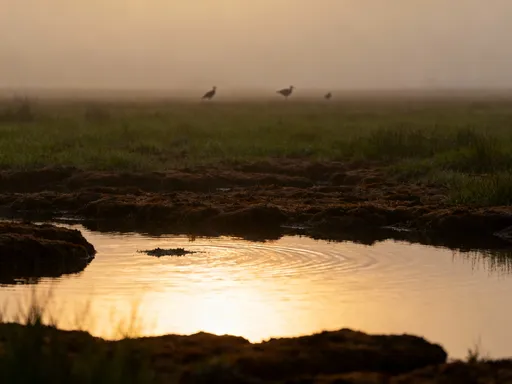
One of the most transcendent experiences available near Invercargill unfolds at first light in the Waituna Wetlands and Awarua Plains. These vast, peat-rich landscapes come alive in the early hours, when mist hovers above shallow lakes and golden light filters through the low-lying clouds. The surface of the water becomes a perfect mirror, doubling the sky and creating dreamlike reflections that are ideal for long-exposure photography. It’s not uncommon to stand in silence as the sun rises, watching the world slowly emerge from shadow, every reed and ripple captured in delicate detail.
Photographers who time their visits carefully are rewarded with conditions that feel almost otherworldly. The best light typically arrives between 6:00 and 7:30 a.m., depending on the season, with autumn and winter offering the clearest skies and softest contrast. A tripod is essential here, allowing for exposures that can stretch into several seconds without blur. Pair this with a polarizing filter to reduce glare and enhance color saturation, especially in the rich browns and greens of the wetland vegetation. A telephoto lens can help isolate distant birds, while a wide-angle captures the expansive horizon where water meets sky.
Weather plays a crucial role in shaping the mood of the wetlands. Overcast mornings, often dismissed by casual photographers, can actually produce the most even lighting, eliminating harsh shadows and preserving detail in both highlights and shadows. Light rain can add texture to the surface of the water, creating subtle ripples that add depth to compositions. Wind is the real enemy—on calm days, the reflections are so sharp they seem painted. On breezy mornings, patience becomes part of the process, waiting for those rare still moments between gusts.
Wildlife adds another layer of intimacy to these scenes. The wetlands are home to several rare and protected species, including the matuku, or Australasian bittern, a secretive bird that moves silently through the reeds at dawn. Herons, shags, and paradise shelducks are also commonly seen, often silhouetted against the glowing sky. Because the area is so quiet and undisturbed, animals are less skittish, allowing for closer observation and more natural behavior in frame. The Department of Conservation (DOC) maintains boardwalks and viewing platforms that allow access without damaging the fragile ecosystem, making it possible to photograph responsibly while still getting close to the action.
Coastal Drama: Storm Chasing at Slope Point and Waipapa Point
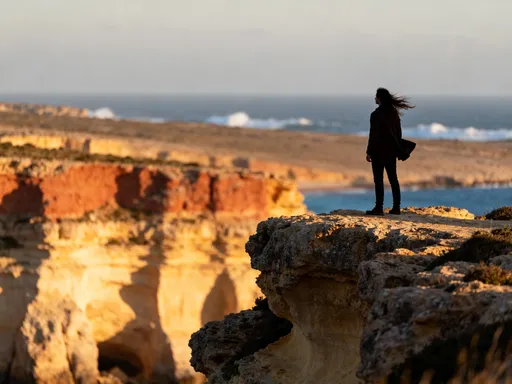
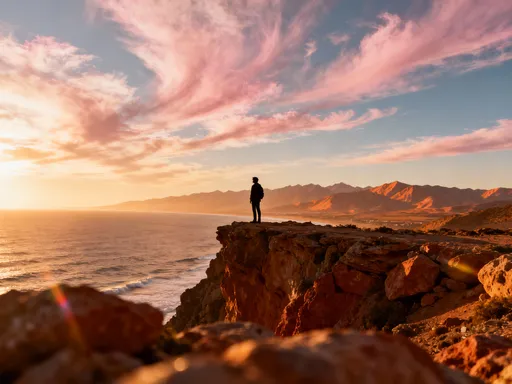
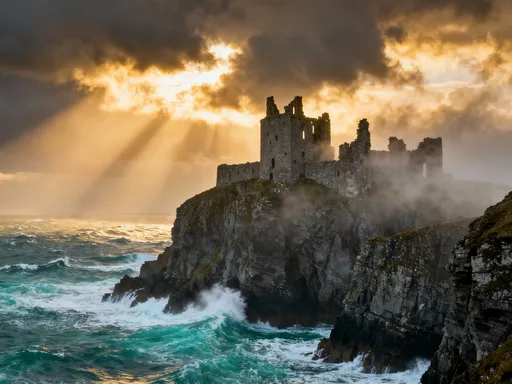
If the wetlands offer stillness, the southern coast delivers raw power. Slope Point, the southernmost tip of New Zealand’s South Island, is a place where the elements reign supreme. Here, the Tasman Sea and the Pacific Ocean converge, sending waves crashing against jagged basalt formations with relentless force. The landscape is shaped by wind and salt—trees grow horizontally, bent by decades of gale-force winds, their trunks twisted into natural sculptures. This is not a gentle coastline; it’s a theater of erosion, motion, and drama, perfect for photographers drawn to moody, high-contrast imagery.
Storm chasing is a legitimate pursuit here, though it requires caution and preparation. The most compelling images are often made just before or after a front passes, when the sky is split between dark clouds and sudden shafts of light. Using neutral density (ND) filters allows for longer exposures, turning churning waves into soft, ethereal mist and emphasizing the contrast between movement and stillness. A sturdy tripod is non-negotiable—on windy days, even a slight tremor can blur the image. Wide-angle lenses excel at capturing the scale of the scene, while telephotos can isolate specific textures in the rock or the arc of a breaking wave.
Safety is paramount. The terrain is uneven, and the edges of the cliffs offer no barriers. Sturdy footwear, weatherproof clothing, and constant awareness of tides and wave surges are essential. It’s wise to visit with a local guide or check conditions with DOC rangers before heading out. The reward, however, is unmatched: images that convey not just what the coast looks like, but how it feels—the roar of the ocean, the sting of the wind, the sense of standing at the edge of the world.
Nearby Waipapa Point offers a different kind of coastal energy. Home to a historic lighthouse built in 1884, this site combines human history with natural beauty. The lighthouse stands sentinel over a sweeping bay, its white tower a striking contrast against stormy skies. At night, with minimal light pollution, the area becomes a prime location for astrophotography. The Milky Way often arcs directly overhead, visible in crisp detail through a fast lens and long exposure. Combining the lighthouse in the foreground with the galaxy above creates a powerful narrative—one of isolation, resilience, and wonder.
Into the Catlins: Waterfalls, Rainforest, and Hidden Coves
A day trip into the Catlins is a journey into one of New Zealand’s best-kept secrets. This sparsely populated region stretches along the southeastern coast of the South Island, where dense rainforest meets wild ocean. The drive itself is part of the experience—narrow roads wind through fern-lined valleys, past sheep-dotted hills, and alongside secluded beaches where sea lions bask in the sun. Every turn offers a new composition, from towering waterfalls to ancient petrified forests, making the Catlins a paradise for photographers who thrive on discovery.
Purakaunui Falls is one of the region’s most photographed landmarks, and for good reason. This three-tiered cascade drops about 20 meters through a curtain of native bush, surrounded by moss-covered rocks and lush ferns. The best light arrives mid-morning, when the sun pierces the canopy and illuminates the spray rising from the pool below. A polarizing filter helps cut through the mist and deepen the greens, while a tripod enables smooth water effects through long exposures. Because the viewing platform is well-maintained and easily accessible, it can attract visitors—but arriving early ensures solitude and pristine conditions.
For those willing to venture further, McLean Falls offers a quieter alternative. Less advertised and slightly more remote, this waterfall is reached via a 30-minute walk through regenerating forest. The trail descends through rata and kamahi trees, opening onto a wide cascade that plunges into a deep, clear pool. The surrounding rock faces are covered in moss and lichen, creating a rich tapestry of texture and color. Wide-angle lenses work well here, capturing both the scale of the fall and the intimacy of the surrounding forest.
The coastal sections of the Catlins are equally compelling. Nugget Point, a narrow peninsula topped with a lighthouse, is legendary among photographers. At sunrise, the sea stacks known as “the Nuggets” stand like sentinels in the golden light, while waves explode against the rocks below. Seabirds wheel overhead, and fur seals often haul out on the rocks, adding life to the scene. The area is especially dramatic during stormy weather, when dark clouds roll in and waves send plumes of spray high into the air. Because the path to the lighthouse is short and well-marked, it’s accessible even in less-than-ideal conditions—though caution is advised on windy or wet days.
Stewart Island/Rakiura: Wilderness Photography After Dark
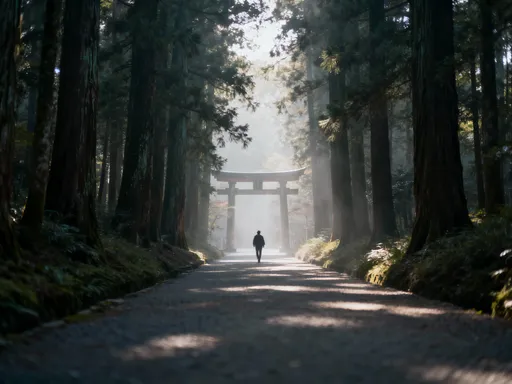
Just a 30-minute ferry ride from Bluff lies Stewart Island, a place where time seems to slow and the natural world takes precedence. Over 80 percent of the island is protected within Rakiura National Park, one of New Zealand’s newest and wildest national parks. The name “Rakiura” means “glowing skies,” a reference to both the aurora australis and the island’s exceptional clarity of light. For photographers, this translates into unparalleled opportunities for night sky photography, low-light wildlife imaging, and immersive forest scenes.
The absence of light pollution makes Stewart Island one of the best places in New Zealand to photograph the Milky Way. On clear nights, the galactic core rises above the southern horizon, arching over quiet bays and silhouetted trees. Using a fast wide-angle lens (f/2.8 or wider), a high ISO setting (1600–3200), and exposures of 15–25 seconds, photographers can capture the full breadth of the galaxy in stunning detail. Including natural foreground elements—such as a rocky shore, a solitary tree, or a wooden jetty—adds scale and context to the image.
But the island’s nocturnal magic extends beyond the stars. It is one of the few places where wild kiwi can be reliably seen—and photographed—with care. These flightless birds are most active at dusk and dawn, foraging along forest trails and beach edges. Capturing them requires patience, a red-light headlamp (to minimize disturbance), and a camera capable of high ISO performance with minimal noise. While flash photography is strictly prohibited to protect the birds’ sensitive eyes, natural light or low-level illumination can yield intimate, grainy images that convey the mystery of the moment.
Glowworms are another highlight, found in damp forest gullies and under bridges along walking tracks. Using a tripod and manual focus, photographers can capture their delicate blue-green light in long exposures, creating images that resemble starfields on the forest floor. The key is to move quietly and avoid touching any vegetation, as the ecosystem here is fragile and protected. DOC rangers offer guided night walks that provide safe, educational access to these experiences, ensuring both visitor safety and environmental protection.
Local Insights: How to Move Like a Resident Photographer
To truly appreciate Invercargill and its surrounding regions, it helps to travel like someone who belongs. This means preparing for changeable weather, respecting local customs, and moving with intention rather than haste. The climate in southern New Zealand is unpredictable—sunny mornings can give way to sudden downpours, and wind is a constant companion. Layered clothing, waterproof gear, and sealed camera bags are not luxuries but necessities. A reliable rental vehicle with good ground clearance is recommended, especially for accessing remote tracks in the Catlins or Stewart Island.
The shoulder seasons—late autumn (April to May) and early spring (September to October)—offer the most favorable conditions for photography. Light is softer, crowds are minimal, and the landscape wears subtle seasonal colors. April brings golden tints to the beech forests, while September sees the first flush of native blossoms. These periods also coincide with fewer tourists, meaning more solitude at popular sites and better chances for spontaneous encounters with wildlife.
Local knowledge is invaluable. The Invercargill Visitor Centre and DOC offices in Oban (Stewart Island) and Owaka (Catlins) provide up-to-date trail information, weather forecasts, and safety alerts. Staff often share tips about recent wildlife sightings or hidden viewpoints not marked on maps. Small cafes and service stations can also be sources of informal advice—locals are generally welcoming and proud of their region’s quiet beauty.
Connecting with DOC rangers enhances the experience further. These professionals are not only custodians of the land but also passionate advocates for conservation. They can guide photographers to lesser-known lookouts, explain ecological significance, and reinforce the importance of treading lightly. Their insights transform a simple photo stop into a deeper understanding of place. By following their guidance—staying on marked trails, avoiding nesting areas, and packing out all waste—photographers contribute to the preservation of these landscapes for future generations.
Why This Place Stays With You: The Emotional Pull of Southern Landscapes
What lingers after a journey through Invercargill and its surroundings is not just the collection of images made, but the feeling of having touched something real. In an age where travel is often curated for social media and defined by iconic landmarks, this corner of New Zealand offers a different kind of fulfillment—one rooted in silence, solitude, and authenticity. There are no crowds vying for the perfect selfie, no timed entries, no artificial enhancements. Just nature, as it has existed for millennia, unfolding at its own pace.
The emotional impact of these landscapes is profound. Standing at Slope Point as waves explode against the rocks, or crouching in the mist at Waituna Wetlands as the first light touches the water, one cannot help but feel small in the best possible way. It is a humbling experience—one that strips away distraction and restores clarity. For photographers, this means images that are not just technically sound, but emotionally resonant. The best photographs made here are not those that replicate postcards, but those that capture a moment of connection: a bird in flight, a shaft of light through the canopy, the curve of the Milky Way over a quiet shore.
There is also a sense of privilege in visiting these places. They remain unspoiled not by accident, but by choice—through conservation efforts, responsible tourism, and the quiet stewardship of local communities. To photograph here is to become part of that legacy, to witness beauty that is not performative but inherent. It is a reminder that the most powerful travel experiences are not about checking destinations off a list, but about being present, attentive, and reverent.
For women between 30 and 55—many of whom balance family, work, and personal aspirations—this kind of journey offers more than visual inspiration. It offers renewal. The slow pace, the immersion in nature, the act of creating something meaningful with a camera—these are forms of self-care that go beyond the surface. They reconnect us with our curiosity, our creativity, and our sense of wonder. Invercargill may not shout, but it speaks clearly to those willing to listen. And for those who do, it offers not just photographs, but memories that endure long after the return home.